
This guide contains affiliate links. See our Site Policies for details.
Flying with a wheelchair, whether manual or powered, is routine for airlines, but it comes with its own set of practical details that general travel advice doesn’t cover: how your chair is transported, what happens to a battery-powered chair, how to reduce the risk of damage, and what to expect getting from check-in to your seat and back into your chair at the other end.
This guide covers what to arrange before you book, how airlines handle different wheelchair types, and how to protect your chair through the journey.
A note on what this is: This is practical travel guidance, not medical advice. It covers the logistics of travelling with a wheelchair, not medical fitness to fly, which is a separate conversation with your doctor if relevant to your situation.
Notifying the Airline
Tell the airline when you book, not just on the day
Airlines need advance notice that you’re travelling with a wheelchair, and for a powered chair, specific details about the battery type. Most airlines want this at the time of booking or at least 48 hours before departure.
What the airline needs to know
The type of wheelchair (manual, powered, scooter), its dimensions and weight, and for powered chairs, the battery type (spillable, non-spillable, or lithium) and its rating. Have this information ready when you book, since it’s often requested immediately.
Confirm again before departure
As with general airport assistance, requests can occasionally get lost between systems, particularly on connecting itineraries with multiple airlines. A confirmation call a few days out is a reasonable extra step.
What Happens to Your Wheelchair
Gate check, not standard check-in
Most wheelchairs are checked at the gate rather than at the check-in desk, meaning you can use your own chair right up until boarding and it’s returned to you, ideally at the aircraft door, on arrival. Confirm this is the process for your specific airline and airport, since it varies.
Cabin storage for some manual chairs
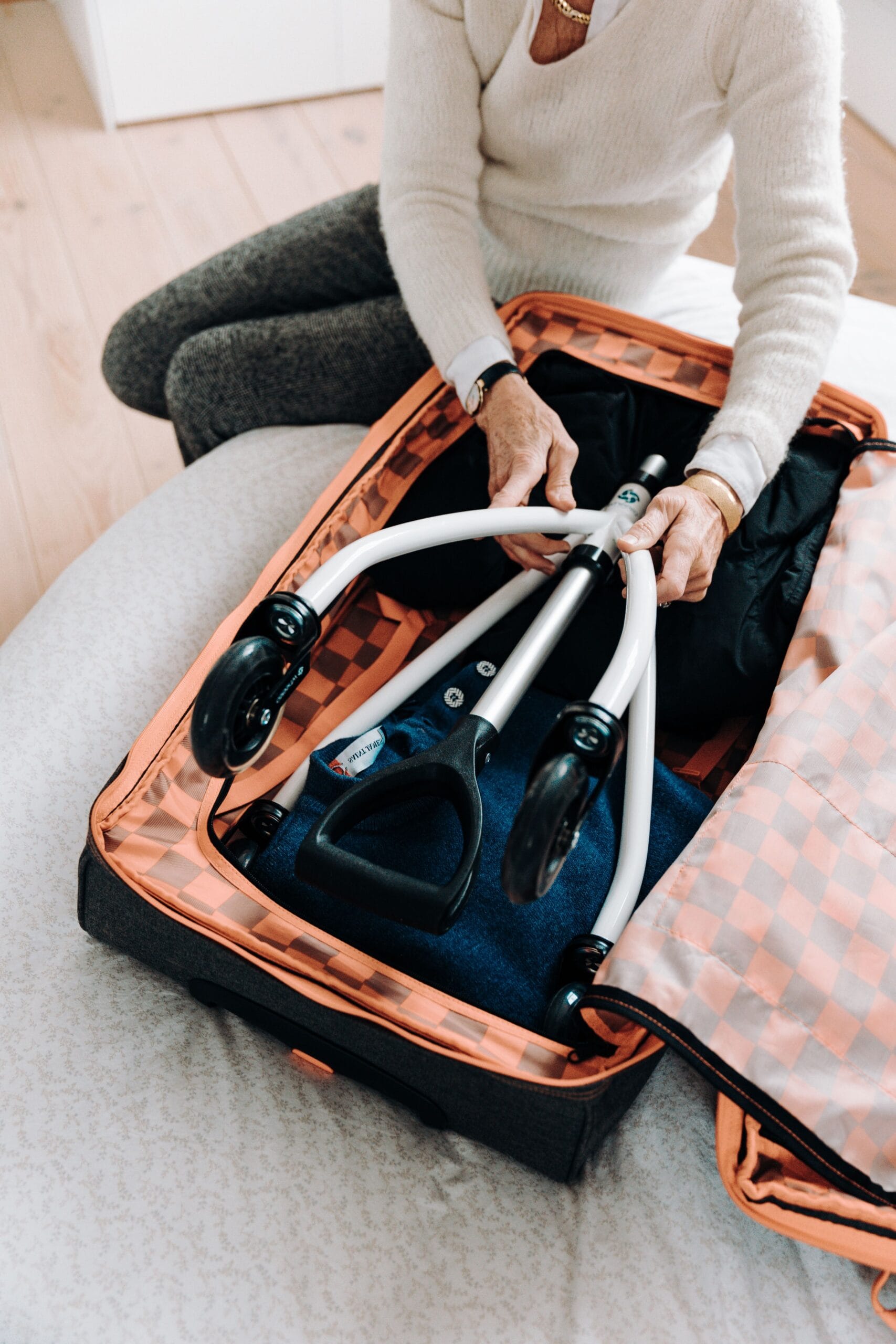
Some smaller, foldable manual chairs may qualify for cabin storage depending on the aircraft and airline policy, though this is the exception rather than the norm for most flights. Ask specifically if this applies to your chair.
The aisle chair
Most aircraft aisles are too narrow for a standard wheelchair, so you’ll transfer to a narrow aisle chair to be wheeled to your seat, then transfer again into your actual seat. Cabin crew are trained to assist with this. If you have specific transfer needs or limitations, let staff know in advance so they can plan accordingly.
Powered Wheelchairs and Batteries
Battery type determines the process
Airlines classify wheelchair batteries as spillable (wet cell), non-spillable (gel or AGM), or lithium, and the handling requirements differ for each. Know your specific battery type before you book, since this is one of the first things the airline will ask.
Non-spillable and lithium batteries
These are generally more straightforward to transport, though most airlines still require the battery terminals to be protected or the battery disconnected before check-in, particularly for lithium batteries above a certain rating.
Spillable (wet cell) batteries
These typically require more specific handling, sometimes including removal from the chair entirely for transport. Confirm the exact requirement with your airline well before departure, since this can affect how much lead time you need at the airport.
Carry documentation of your battery specifications
A label or document confirming the battery type and rating speeds up the check-in process considerably, since staff otherwise have to identify it themselves. If you want to label the chair directly, lithium-ion batteries use the UN3481 classification and lithium metal (non-rechargeable) batteries use UN3480 — matching the correct code to your specific battery type is worth doing properly rather than using a generic “caution” sticker. A simple printed card with the battery type, rating, and your contact details, kept with the chair or in your carry-on, works just as well if you’d rather not attach a label to the chair itself.
Reducing the Risk of Damage
This is one of the most common frustrations for wheelchair users who fly, and a few precautions genuinely help.
A protective travel cover
A padded cover over your chair during gate check protects it from scuffs, dirt, and minor impacts during loading and unloading. Read: Wheelchair Travel Cover — a padded, protective cover designed to shield a wheelchair from scrapes and dirt during gate check and cargo handling, easy to remove and fold away once you’re reunited with your chair.
Remove or secure detachable parts
Footrests, cushions, and other removable components are more likely to be damaged or separated from the chair during handling. Where practical, remove and carry these separately, or secure them firmly to the frame.
Photograph your chair before you fly
A few photos of your chair’s condition immediately before check-in gives you a clear reference point if you need to report damage on arrival.
Report damage immediately
If your chair is damaged, report it before leaving the airport, not after. Airlines have specific processes and timeframes for wheelchair damage claims, and reporting promptly matters for getting it resolved.
Getting Through the Airport
Request assistance in advance
Even with your own wheelchair, coordinating check-in, security, and boarding often benefits from a pre-arranged assistance request. See our guide on Requesting Airport Assistance for how to arrange this.
Security screening
Wheelchair users can request a private screening area and are entitled to have their chair screened without being separated from it for an extended period. Inform security staff of any specific needs before screening begins.
Allow extra time
Between gate check procedures, security, and boarding via aisle chair, build in more time than a standard departure, particularly at an unfamiliar airport.
Before You Book
Notify the airline with full chair and battery details
Do this at the time of booking, and confirm again closer to departure.
Know your battery type and rating
Have this information ready, since it determines the entire handling process for a powered chair.
Arrange airport assistance
Request this alongside your wheelchair notification, so both are coordinated together.
Check your travel insurance
Confirm your policy covers your mobility equipment specifically, not just general medical costs, since wheelchair damage or loss during transit is a distinct risk. Read our Travel Insurance and Pre-Existing Conditions guide for what to check before you buy.
FAQs
Do I need to notify the airline in advance if I’m flying with a wheelchair?
Yes, ideally at the time of booking or at least 48 hours before departure, particularly for a powered wheelchair where the airline needs specific battery information.
What happens to my wheelchair during the flight?
Most wheelchairs are checked at the gate, allowing you to use your own chair until boarding, and it’s typically returned at the aircraft door on arrival. Confirm the specific process with your airline.
Can I bring my own wheelchair battery information, or does the airline test it?
Airlines rely on you to accurately report the battery type and rating. Carrying documentation or a label speeds up the process, but you don’t need special testing beforehand.
What if my wheelchair is damaged during the flight?
Report it before leaving the airport. Airlines have specific processes for wheelchair damage claims, and prompt reporting matters for resolution.
Will I use my own wheelchair to board the plane?
Generally no, since most aircraft aisles are too narrow. You’ll transfer to a narrow aisle chair for boarding, then into your seat, with cabin crew assisting.
Do I need travel insurance that specifically covers my wheelchair?
It’s worth checking. Confirm your policy covers mobility equipment specifically, since damage or loss during transit is a distinct risk from general medical costs.
Final Thoughts
Flying with a wheelchair is a routine part of air travel for airlines, and the details that matter most are notifying the airline with full chair and battery details well in advance, understanding what happens to your chair between check-in and your seat, taking simple precautions to reduce damage risk, and knowing the process for reporting any damage immediately if it happens.
A note on what this is: This is practical travel guidance about wheelchair travel logistics, not medical advice.
For more on travelling with mobility needs, read our guides on requesting airport assistance and flying with arthritis.